ServicesGutters
Gutters in Macclenny, Sized and Pitched to Carry the Rain
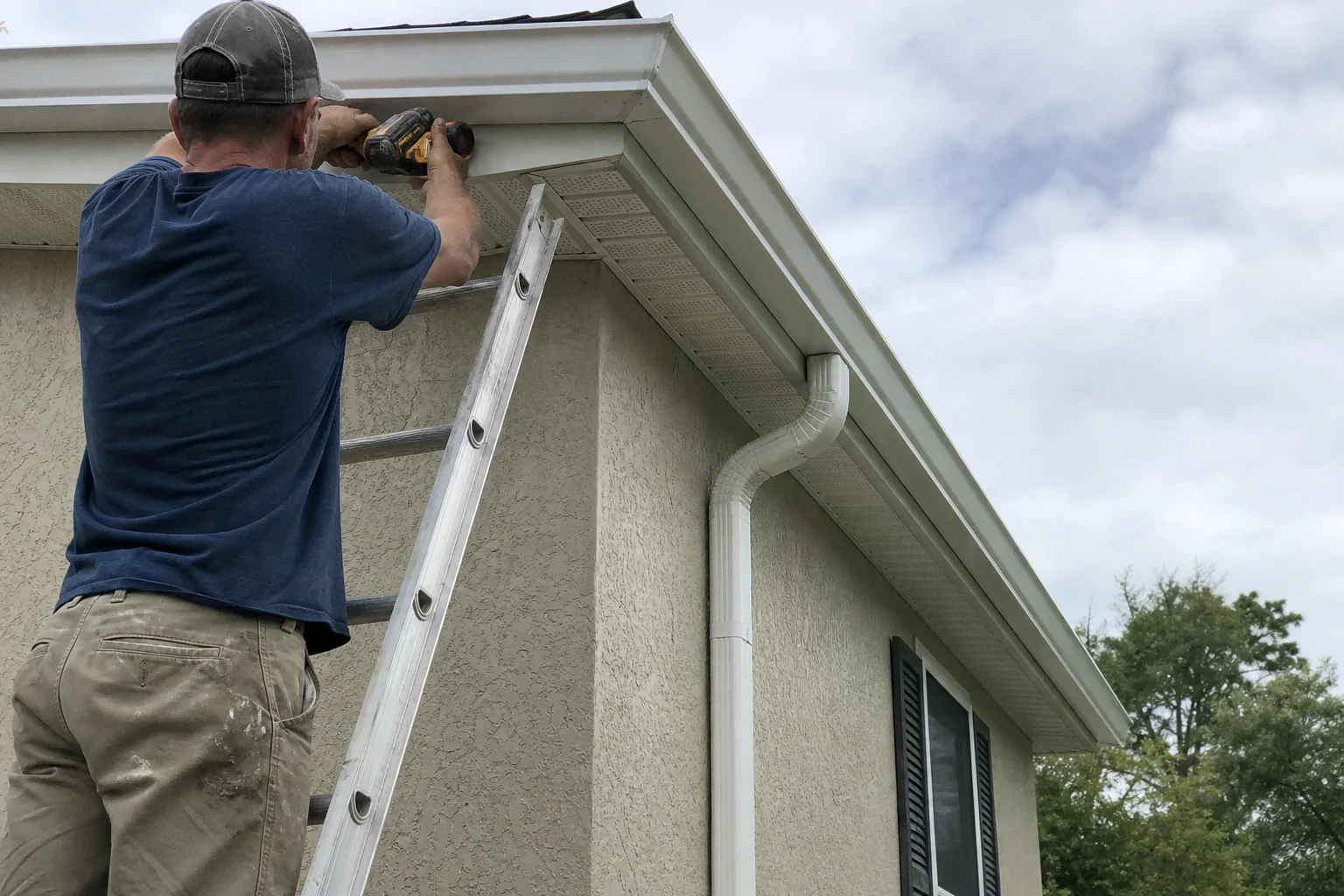
We install and repair continuous aluminum gutters and downspouts that move roof water away from your fascia, your walls and the ground around your foundation. Each run is measured to your roof, pitched by hand and fastened with hangers that hold through heavy summer storms.
What a well-built gutter system does for your home
A roof collects more water than most people expect. One inch of rain on a 2,000-square-foot roof sends roughly 1,200 gallons toward the eaves, and the gutters decide where it goes. When they are undersized, clogged or pitched the wrong way, that water spills over the front lip, soaks the fascia board and splashes back against the walls and slab.
There is a comfort side to this as well. Water that pools along the foundation keeps the soil and air around your home damp, and some of that moisture finds its way indoors, where your air conditioner has to work to pull it out. Overflow also rots fascia and soffit, which opens gaps for wet air and pests and can choke the soffit vents your attic relies on to let heat escape. Gutters that drain properly keep those problems from starting.
Because we are a roofing company, we look above the gutter too. If the real trouble is a missing drip edge or a valley dumping too much water in one spot, we say so and point you toward roof repair instead of selling you new gutters you do not need.
The work behind every gutter we hang
- Continuous runs shaped in your driveway
- We bring a forming machine and a coil of aluminum, then shape each length to fit its eave exactly. The only joints sit at corners and end caps, so there are far fewer spots for a drip to start. Trim colors are picked to match your fascia or sit quietly beside it.
- Downspouts placed where water can leave
- We use larger 3-by-4-inch downspouts on long runs and below valleys that gather heavy flow. Each outlet is positioned so water can be carried well clear of the slab, with extensions or splash blocks suited to your yard.
- Hidden hangers and a measured pitch
- Hangers go in about every two feet and screw into solid wood, not just the face of the board. We set a gentle, consistent slope toward each outlet so water moves without standing.
- Fascia and drip edge checked first
- Before a new gutter goes up, we probe the fascia for soft spots. Rotted sections are replaced so the gutter has sound wood to hold onto, and we confirm the drip edge directs water into the trough rather than behind it.
- Gutter guards where the trees call for them
- Pine needles and oak leaves can fill an open gutter in a single season. If your lot has heavy tree cover we can fit guards, and if it does not, we will tell you plainly.
Signs your gutters need attention
Rain spilling over the lip
During a hard storm, water should travel along the trough to an outlet. If it pours over the front edge instead, debris is blocking the flow, the gutter is too small for the roof above it, or the slope runs the wrong way.
Runs that tilt or leave a gap
When a trough leans outward or separates from the board behind it, the hangers have usually let go or the wood holding them has softened. Once water starts slipping behind the gutter, the damage spreads fast.
Peeling paint or soft trim
Blistered paint, dark streaks or spongy fascia boards point to water getting where it should not. Caught early, the repair is small.
Puddles, washouts or stains at the foundation
Eroded soil, mildew on the lower wall or water standing beside the slab after rain all suggest downspouts are dumping too close to your home.
Drips at corners and seams
Older sectional gutters often leak at every joint as the sealant ages. Steady drips there are a good reason to consider one-piece replacement runs.
How a gutter job runs
- 1
A free visit and careful measurements
We walk the roofline, measure every run, note where water collects and check the fascia from a ladder. You get photos of anything worth seeing up close.
- 2
A written estimate with clear options
You receive a line-item estimate covering gutter size, downspout count, any fascia repair and guards if they make sense. We explain each choice so you can decide without pressure.
- 3
Installation day
We cover plants and beds below the eaves, take down the old gutters and replace any rotted fascia. The new runs are formed on site, hung, pitched and sealed at the corners, then tested with a hose to confirm every outlet drains.
- 4
Cleanup and a walk-through
Old gutters, scraps and fasteners are hauled away and the ground is swept with a magnet. We walk the finished work with you and show you where each downspout carries water.
What shapes the cost of gutters
Gutter pricing follows the shape of your home more than anything else. We measure on site and put every item on paper, so the number you see covers the whole job. Financing is available if you would rather spread the cost out.
- Linear footage and height
- Total length of eave drives material cost, and two-story sections take more time and ladder work than single-story runs.
- Corners, outlets and downspouts
- A home with many roof angles needs more mitered corners and downspouts than a simple rectangle of the same length.
- Condition of the fascia
- Sound wood needs nothing extra. Rotted boards have to come out before new gutters go up, and the pictures from your visit point out exactly which ones.
- Trough width and guards
- Six-inch gutters cost a little more than five-inch and carry considerably more water. Guards raise the total too, though under heavy trees they can spare you years of ladder work.
Answers about gutters and downspouts
Something not covered here? (904) 867-2243
Is a new roof a good time to put up new gutters?
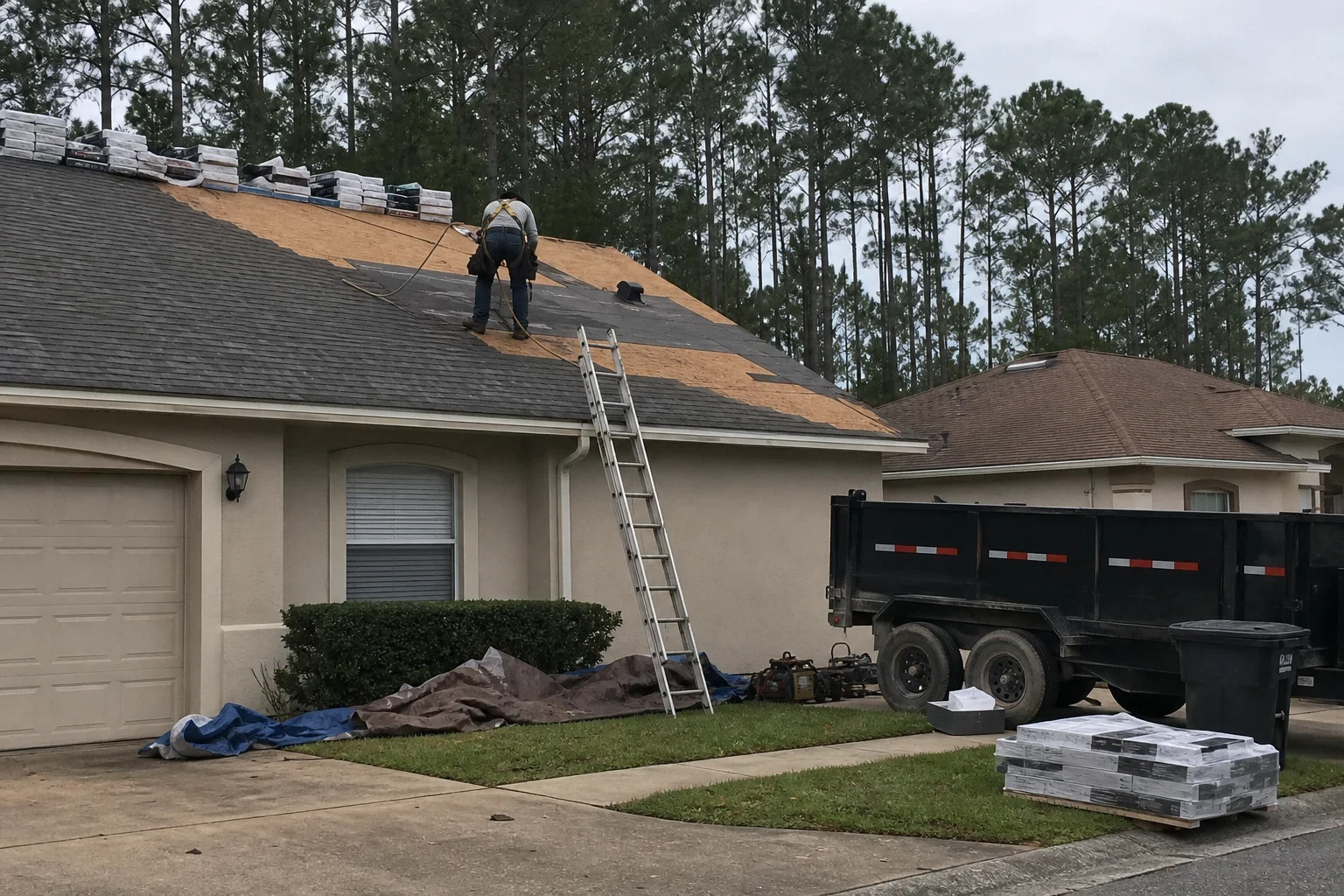
Often, yes. With the old roofing off, the drip edge and fascia are open to view, and fresh gutters can be fitted right to the new roof edge. If the gutters you have are sound and sized correctly, rehanging them is usually an option. We look at both before suggesting anything as part of a roof replacement.
Do I need five-inch or six-inch gutters?
Five-inch gutters handle many simple roofs well. Steeper roofs, large roof planes and spots below valleys often need six-inch gutters to keep up with summer downpours. We size them from your actual roof, not a default.
Are gutter guards worth it?
Under pines and oaks, usually yes, because needles and leaves clog open gutters quickly. Where few branches hang over the roof, clearing the troughs by hand a couple of times a year generally keeps them flowing. We will give you an honest read on your yard.
Can you repair a section instead of replacing everything?
Yes. Resealing corners, replacing a damaged run, adding hangers or moving a downspout are all common repairs. If the system is aging throughout, we will explain why replacement may cost less over time.
Will new gutters lower my energy bills?
Not directly, and we would not claim they do. What they do is keep moisture away from your foundation and protect the soffit vents that help your attic shed heat, which supports a drier, more comfortable home. A roof inspection can tell you whether ventilation is worth a closer look.

Let us take a look at your gutters
We will measure your roofline, check the fascia and show you exactly what we find. After a storm, the same visit can include a free post-storm inspection of the roof above.