ServicesRoof Repair
Macclenny Roof Repair That Keeps Water and Heat Where They Belong
We find where water is getting in, fix that spot with materials matched to your roof, and check whether the leak has soaked insulation or decking along the way. A sound repair keeps the attic dry, and a dry attic keeps your home easier to cool.
Why Most Leaks Call for a Fix, Not a New Roof
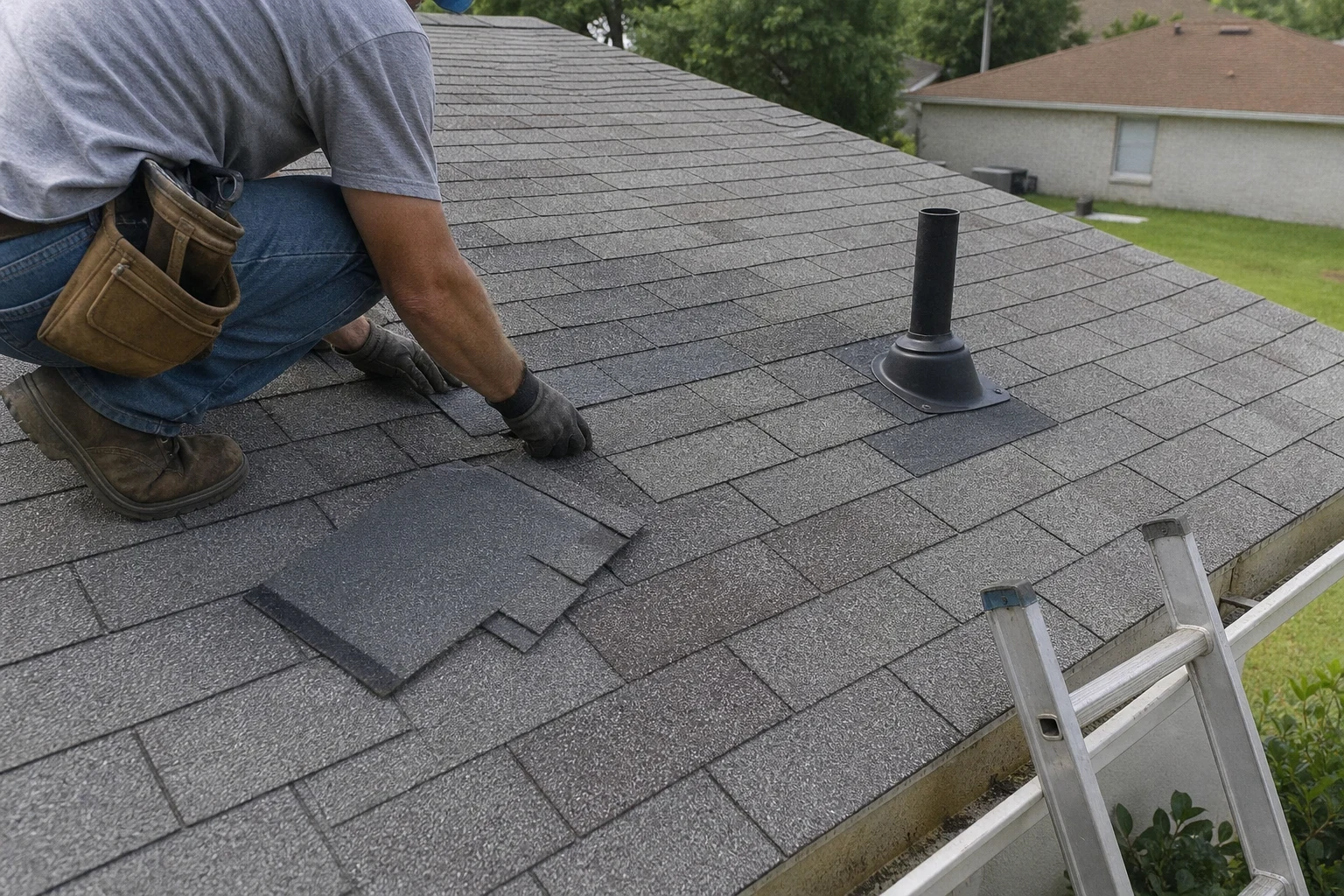
A leaking roof is usually failing at one spot, not everywhere. The usual culprits are a split rubber collar around a plumbing vent, a few shingles whose adhesive strip let go in a strong gust, a nail that worked its way up, or flashing that separated from a wall or chimney. Correct that one point carefully and the rest of the roof keeps working for years.
Water rarely drips straight down from where it enters. It runs along the deck and rafters before it shows on a ceiling, so we trace it back rather than patching the stain. We also look at what it touched. Wet attic insulation loses much of its ability to slow heat, and in a North Florida summer that shows up as an upstairs that never quite cools and an air conditioner that runs longer than it should.
When the shingles are worn out across most of the roof and another fix would hold for only a short while, we tell you that directly and explain what roof replacement would involve. If the roof still has good years in it, we repair the part that failed and leave everything else as it is.
Repair Work We Handle on Your Roof
Finding the true entry point
When the attic is reachable, we begin there and follow stains and darkened wood upslope toward the source. We then confirm the spot from the shingle side before opening anything.
Shingle replacement and resealing
Missing, creased or unsealed shingles are replaced with the closest available match in profile and color. We hand-seal the surrounding tabs so the patch sits flat and does not catch the next gust.
Flashing and pipe boot repair
Step flashing at walls, chimney flashing and the rubber boots around vent pipes are where most leaks begin. We replace cracked boots and refit or replace loose flashing rather than smearing sealant over it.
Soft decking and underlayment
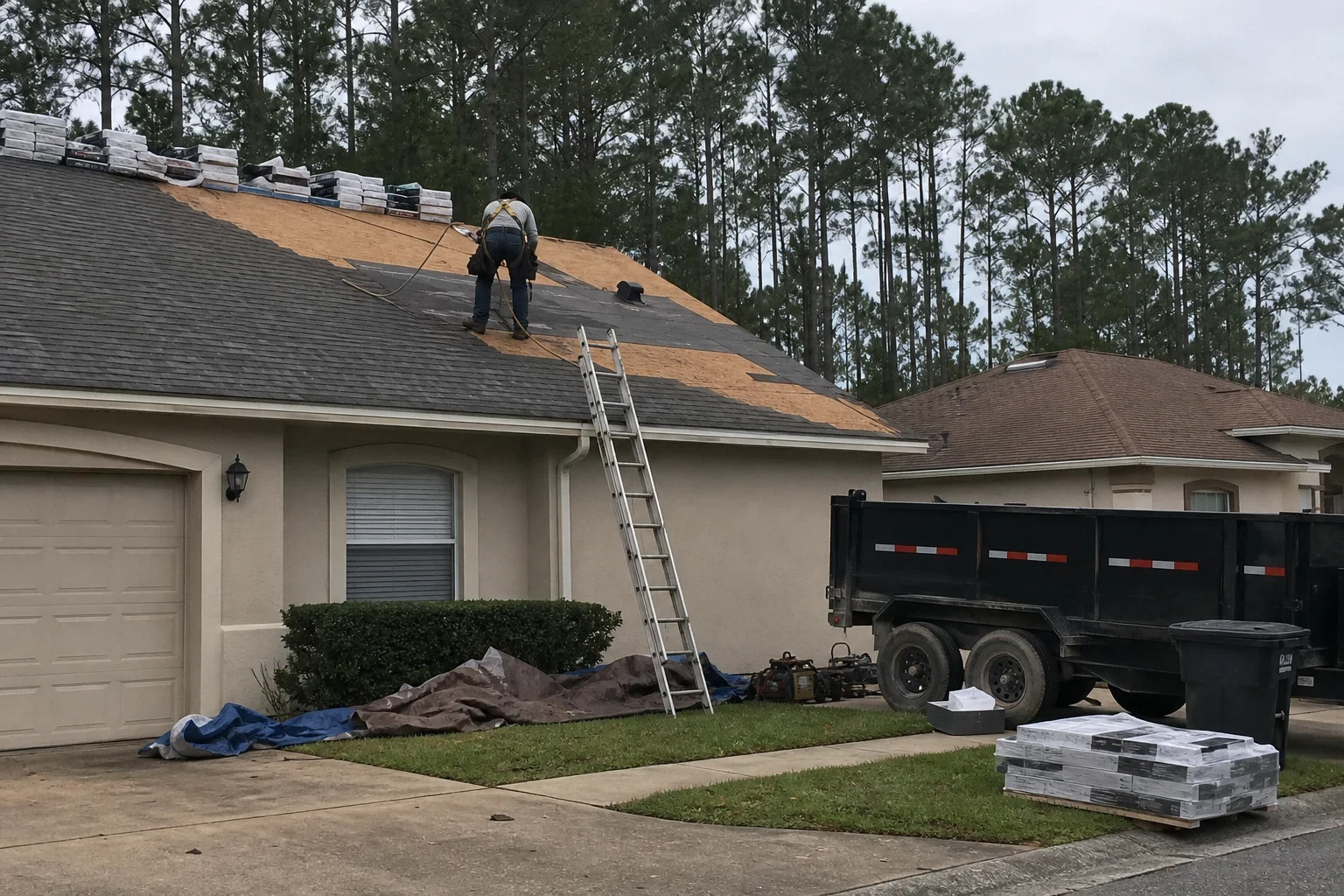
Plywood that has turned spongy from repeated wetting gets cut back to solid wood and replaced, with fresh underlayment laid over it before the shingles return. A new patch over rotten sheathing would only relocate the leak.
Ridge and attic vent fixes
Damaged ridge caps and vents let in rain and can upset how the attic breathes. Restoring them helps hot, humid air leave the attic instead of sitting over your ceilings.
Signs Your Roof Needs a Repair
- Ceiling stains that grow after rain
- A brown ring that spreads after each storm means water is still reaching the drywall. The entry point is often several feet away from the stain.
- Shingles in the yard
- A few tabs on the lawn after a windy afternoon thunderstorm leave bare spots where underlayment is exposed to sun and rain.
- Musty smell or damp insulation
- A stale odor in the attic, darkened wood or matted insulation points to a slow leak. It also means the insulation is doing less to keep heat out of your rooms.
- Rooms that are harder to cool
- One upstairs room that stays warmer than the rest can trace back to wet insulation or a damaged vent above it. It is worth a look before assuming the air conditioner is the problem.
- Granules collecting in gutters
- Heavy grit in the gutters or at the downspouts means shingles are wearing thin in places. Our gutters page covers what else to watch for along the eaves.
- Lifted flashing or cracked boots
- From the ground you may see metal pulled away from a wall or a split collar around a vent pipe. Both are simple fixes early and costly ones once water has reached the framing.
How a Repair Visit Runs
- 1
Your first call
Describe the stain, the drip or the missing shingles and roughly where they are. We arrange a time for a technician to come out, and that estimate is free with no obligation.
- 2
Inspection and photos
We check the attic and the roof, find the cause and photograph it along with anything nearby that is starting to fail. You see what we saw before any work is discussed.
- 3
A written estimate
We explain what needs fixing now, what can wait and why, with each item listed. If a repair would not hold, we tell you plainly and walk through the options.
- 4
Repair day and cleanup
A typical repair takes one visit. Before work starts we cover plants and walkways beneath the work area. Afterward we gather old materials, sweep for nails and walk you through the finished repair.
What Shapes the Cost of a Roof Repair
Two leaks that look alike from the ceiling can cost very different amounts to fix, depending on what is underneath. We price each repair after we have seen the cause, and the estimate lists every item. Financing is available for larger repairs.
- How far the water traveled
- A leak caught early may only need a new boot or a few shingles. One that has run for months can mean replacing decking, underlayment and attic insulation.
- Pitch, height and reach
- A steep roof, a two-story eave or a repair tucked between branches and another roof plane calls for more setup and fall protection. That extra rigging adds time to the job.
- Matching the existing roof
- Widely sold architectural shingles are simple to find. Discontinued lines, older three-tab styles and metal panels take more searching to get a close match.
- Flashing and penetrations
- Repairs around chimneys, skylights, walls and several vent pipes involve more detailed metalwork than open field shingles.
Roof Repair Questions
- Can you just patch the leak, or will I need a new roof?
- Most of the time a repair is enough. We base the answer on the age and condition of the whole roof, not just the leak. If the shingles are brittle across large areas and repairs keep stacking up, we will show you why replacement makes more sense and leave the decision with you.
- Will the new shingles match my roof?
- We look for the nearest match in style and color. Shingles that have spent years in the sun fade a shade, so a fresh patch can stand out slightly when it goes on. It tends to blend in as it weathers.
- Does a roof leak really affect my energy bills?
- It can. Wet insulation holds heat and moisture instead of blocking them, so the rooms below get warmer and the air conditioner works harder. Damaged vents can also trap hot air in the attic. Fixing the leak and replacing soaked insulation addresses both.
- Is my leak covered by insurance?
- Sudden damage from wind or a falling limb often is, while wear from age usually is not. When a storm is the cause, we work directly with your insurance adjuster on storm damage claims, and you keep a copy of every photo taken during our visit. Our storm damage repair page explains how that process unfolds.
- Do I need to be home for the repair?
- Not usually, as long as we can reach the roof and, when needed, the attic. We will go over the plan with you beforehand and share photos of the finished work afterward.
Have a Leak Looked At Before It Spreads
A small repair now protects your decking and keeps your insulation working. We serve Macclenny and nearby towns such as Starke and Middleburg, and every estimate starts with a free visit.