ServicesRoof Replacement
Roof Replacement in Macclenny, Planned From the Decking Up
When a roof is past saving, we replace the whole system: tear-off, sound decking, new underlayment, flashing and balanced attic ventilation. The result is a dry, code-compliant roof that also helps your home shed summer heat instead of storing it in the attic.
When Replacing Beats Repairing
A worn-out roof rarely quits all at once. It sends signals first: shingles shed their granules, seal strips stop holding, and patches start stacking on top of patches. At some point another repair only buys a season, and the money is better spent on a roof that will hold for the long term. We will tell you plainly which side of that line your roof is on. If a targeted roof repair will do the job, that is what we recommend.
A replacement is also the one moment you can fix what sits underneath. Soft decking, missing drip edge, tired pipe boots and an attic that cannot breathe all get corrected at once. That last item matters more than most people expect. Through a North Florida summer, an attic with no real airflow bakes well past the outdoor temperature. The trapped heat soaks into the ceiling below, and your air conditioner keeps running long after sunset.
What a Replacement Includes
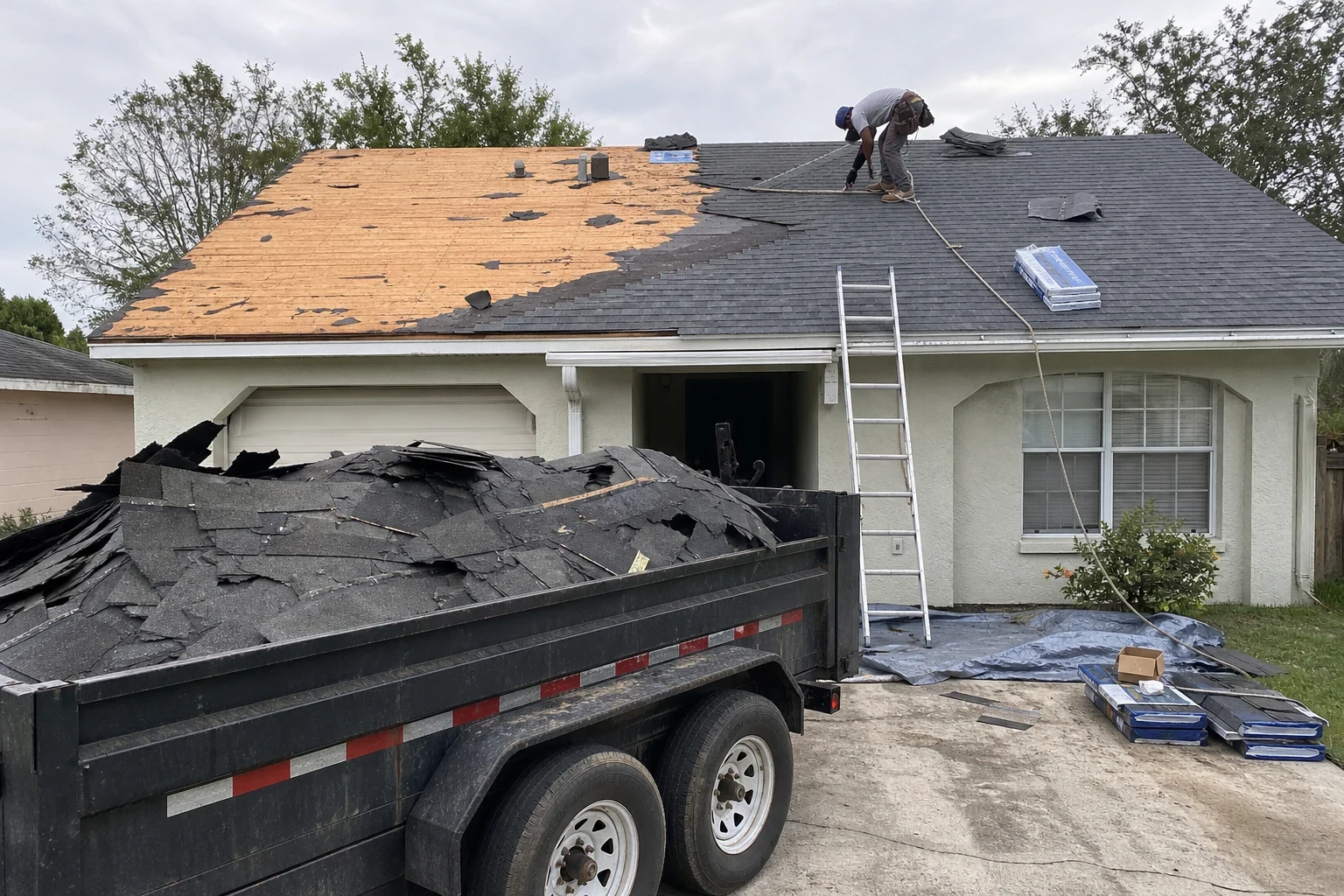
Complete tear-off
Every existing layer comes off, and new shingles never go over old ones. With the boards bare, we can judge their condition, and your framing carries less weight.
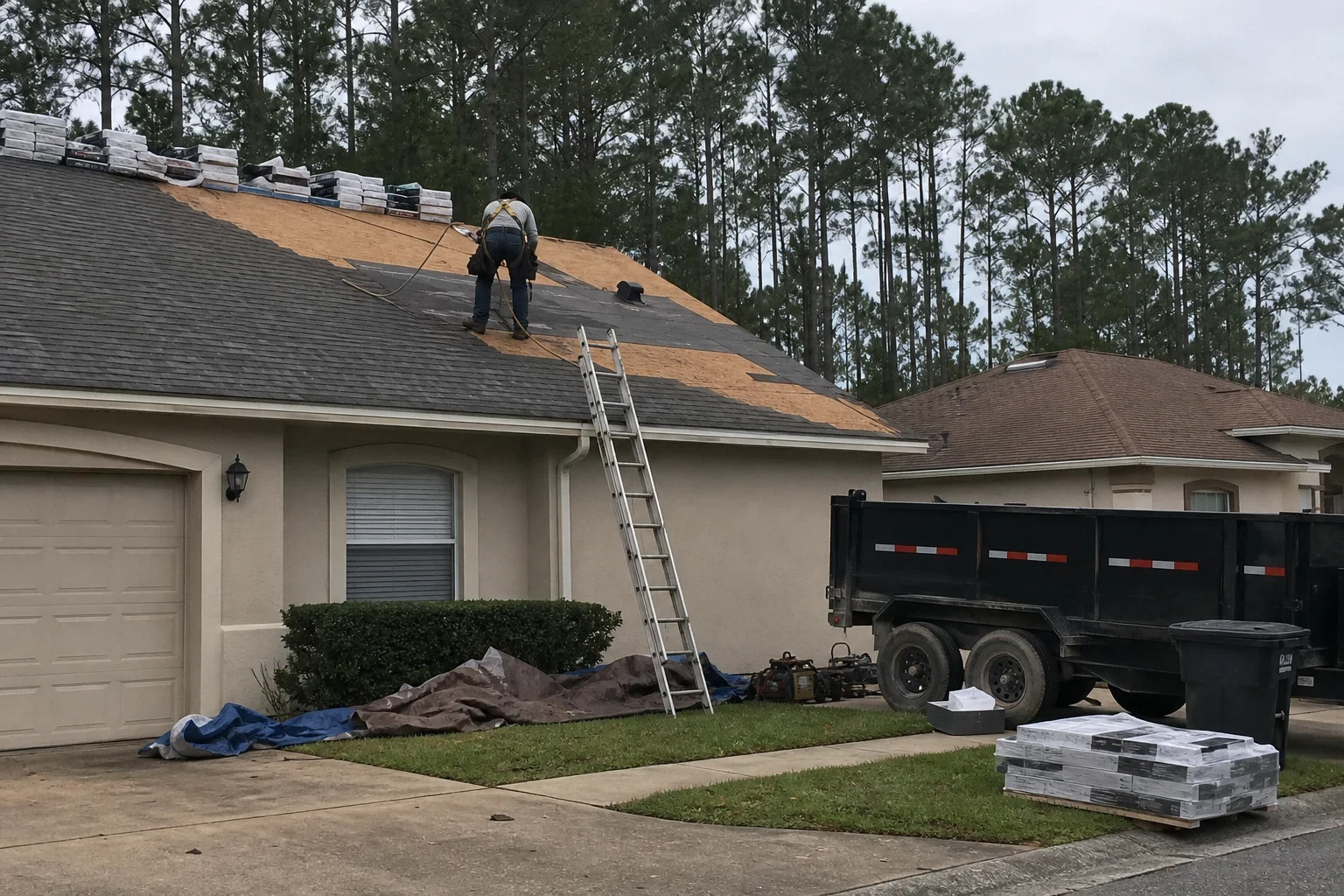
Decking inspection and replacement
Every sheet is walked and checked for rot, delamination and loose nailing. Damaged sections are replaced and re-nailed so the new roof has a firm base.
Underlayment and water barrier
A synthetic underlayment goes down over the whole deck, with added protection in valleys, at eaves and around penetrations, where wind-driven rain tends to find its way in.
New flashing, drip edge and boots
Wall flashing, chimney flashing, pipe boots and drip edge are replaced, not reused. Old metal is often where a well-shingled roof still leaks.
Balanced attic ventilation
Fresh air comes in low along the eaves and leaves high through a vent at the peak, so warm, moist air never sits still under the deck. Set up properly, the attic stays cooler and the shingles are spared from baking on both sides.
Permit, cleanup and final walk
We pull the permit and schedule the inspection. At the end of the job the yard is cleared, the property is swept with a magnet for nails, and we walk the finished roof with you.
Signs Your Roof Is Ready to Be Replaced
- Bare or curling shingles
- Granules in the gutters and dark, smooth patches on the roof mean the shingles have lost their sun protection. Curled or cupped edges lift easily in the next strong wind.
- Repeated leaks in new places
- One leak is a repair. Leaks that keep appearing in different rooms usually point to a roof that is wearing out everywhere at once.
- A soft or sagging deck
- A roofline that dips between rafters, or decking that flexes underfoot, often means moisture has been getting in for some time.
- An attic that stays hot and damp
- Stale, heavy air, darkened sheathing or mildew on the underside of the roof suggest poor ventilation. A new roof is the cleanest time to correct it.
- Storm damage across several slopes
- If wind has creased or torn shingles on more than one side, matching patches rarely hold. Our storm damage repair page explains how we assess it.
How the Work Runs
- 1
Estimate on the roof
We climb up, check the attic and photograph what we find. You get a written, line-item estimate that separates the roof itself from any decking or ventilation work.
- 2
Material and color choices
We talk through shingle lines and colors, or metal roofing if it suits your home. Lighter, reflective colors can help with heat, and we will say honestly how much difference to expect.
- 3
Preparing your property
Tarps go over plants and against the walls, and the dumpster is placed where it will not block you in. We plan the start around the forecast, since an open deck and an afternoon thunderstorm do not mix.
- 4
Tear-off and installation
Most homes are torn off and dried in the same day, then finished over the following day or two. Each evening the roof is secured and the ground is cleared.
- 5
Inspection and walk-through
Once the permit inspection passes, we go over the finished roof with you and leave notes on simple upkeep.
What Moves the Price
We price every replacement from measurements and photos of your own roof, not a rate card. Your estimate breaks the job into separate lines, so the roof itself, any decking and any ventilation work are each priced on their own. Financing is available if you would rather spread the cost.
- Roof size and pitch
- A bigger roof takes more material and more hours. A steep one calls for harnesses, roof jacks and slower, more careful footing on every course.
- Condition of the decking
- Rotted or damaged sheathing is replaced by the sheet. We show you photos of anything we find before it is added.
- Material you choose
- Architectural shingles, premium lines and metal panels each carry a different cost and lifespan.
- Ventilation and details
- Adding ridge vent, opening soffit intake or rebuilding chimney flashing adds work, and often pays back in a cooler attic.
- Layers and access
- More than one old layer means more tear-off and disposal. Tight lots or limited driveway space can affect setup.
Roof Replacement Questions
- Will a new roof lower my cooling bills?
- It can help, mainly through better ventilation and, if you choose it, a more reflective material. The shingles alone do not change much. How large the difference is depends on your insulation and ductwork, so we will not promise a number.
- Can you put new shingles over my old ones?
- We do not recommend it. Roofing over hides the decking, traps heat and adds weight. A full tear-off is the only way to know the base is sound.
- How long will my home be disrupted?
- Most replacements take one to three days depending on size and weather. There is noise during tear-off, but you do not need to leave, and we keep driveways and doors clear.
- Will you work with my insurance company?
- If the replacement follows storm damage, we work directly with your insurance adjuster, sharing photos and measurements. The adjuster makes the coverage decision, and we explain each step so nothing comes as a surprise.
- Should I consider metal instead of shingles?
- Metal reflects more heat and lasts longer, at a higher upfront cost. Our metal roofing page covers it in detail, and we are glad to price both during your estimate.
Find Out Where Your Roof Stands
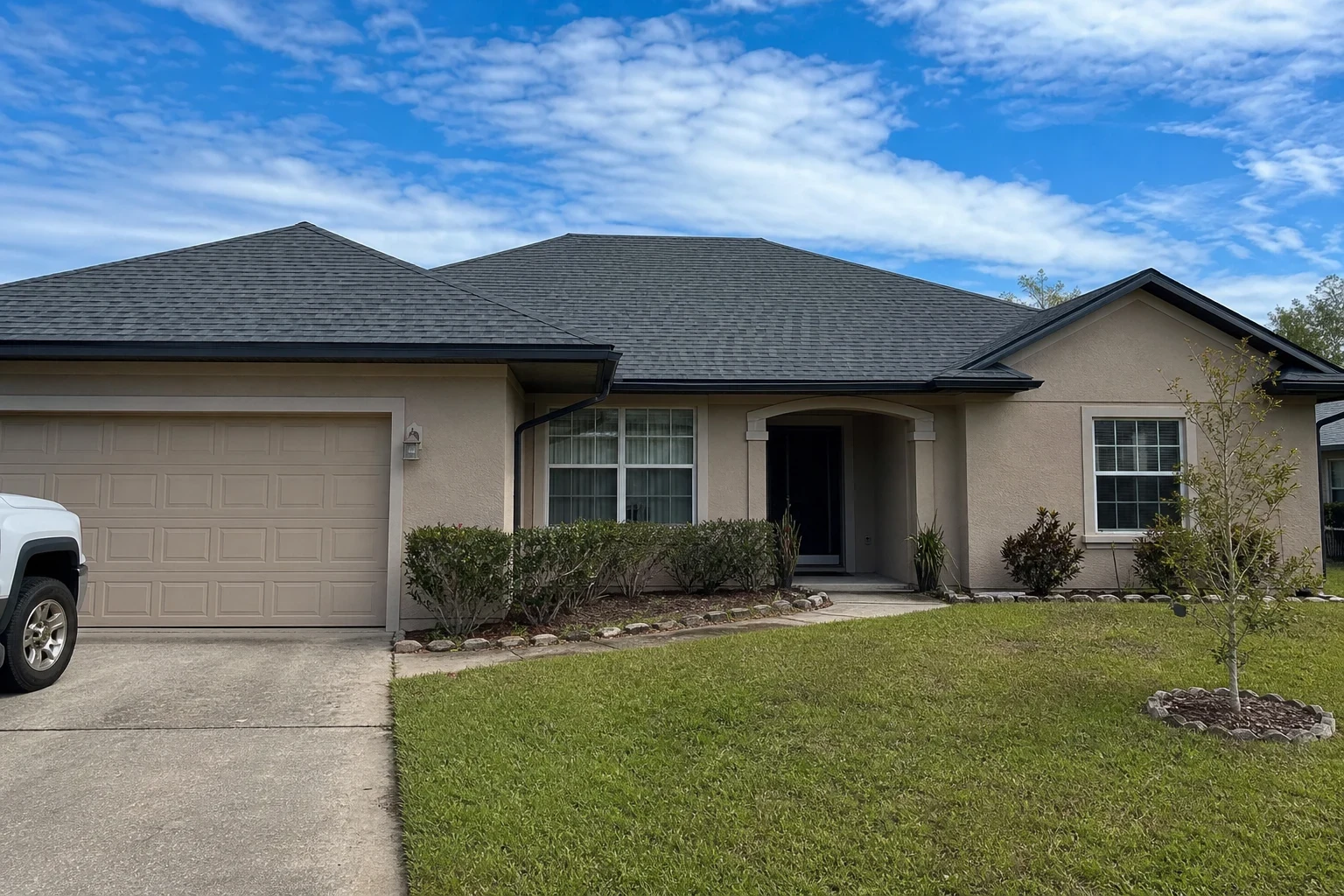
We will inspect the roof and attic, show you what we found and put a clear estimate in your hands. If a repair is the better answer, we will say so.