ServicesStorm Damage Repair
Storm Damage Repair in Macclenny, From First Photo to Final Seal
When wind, hail or a falling limb gets through your roof, we find every point of damage, photograph it for your claim and make the repairs that close your home back up. A dry, sealed attic also keeps your cooling costs where they belong.
When a storm leaves more than one weak spot
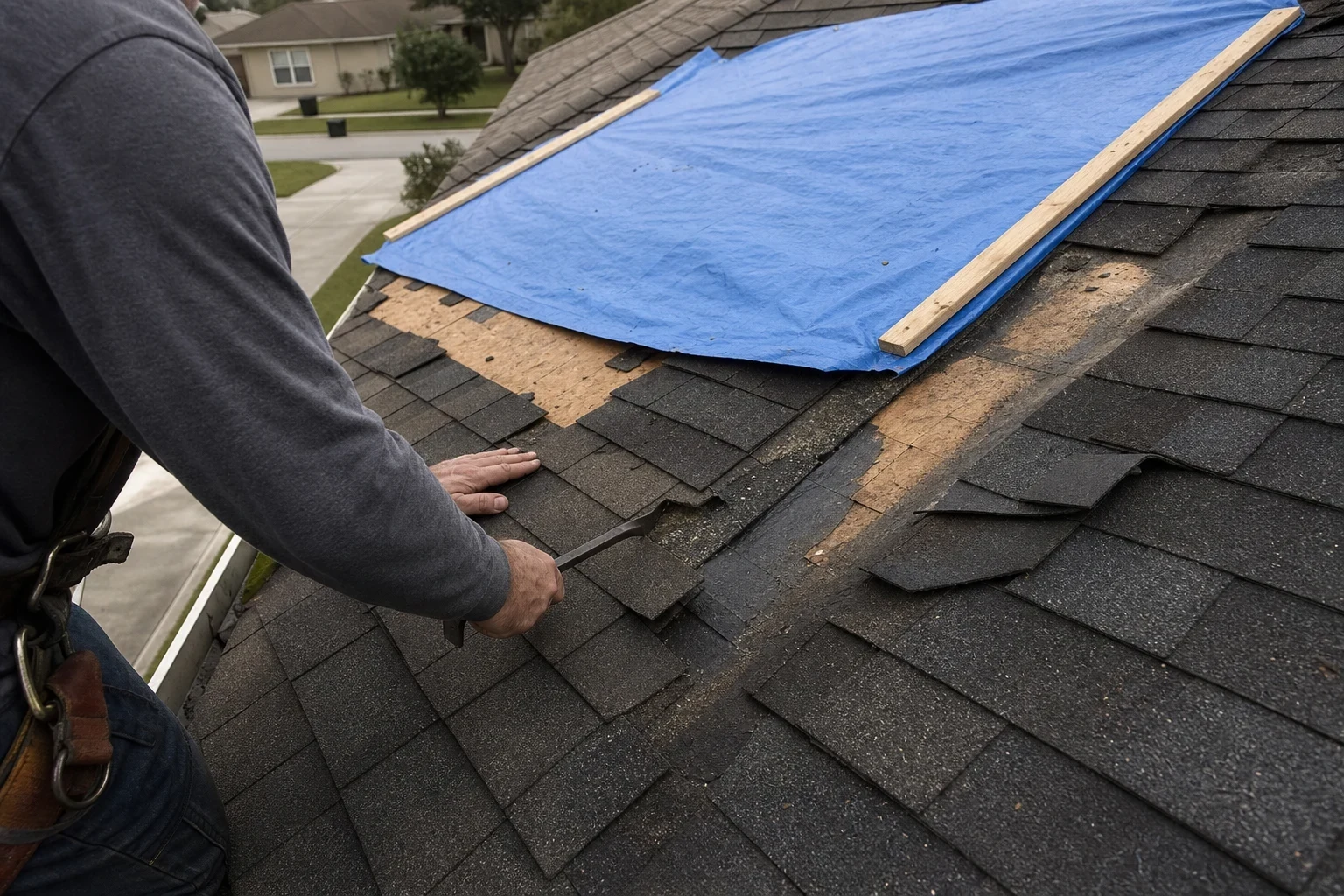
A storm usually leaves a scatter of smaller injuries rather than a single opening. Think of creased shingles along a rake edge, a ridge cap folded back by a gust, a pipe boot torn by a flying branch, or flashing nudged out of place so rain can slip sideways beneath it. We look for every one of those, not just the place where water shows up indoors.
We repair what can be repaired and tell you plainly when a section, or the whole roof, has reached the point where roof replacement makes more sense. Either way, you get the answer in writing with photos behind it.
There is a comfort side to this as well. Water that reaches the attic soaks insulation and flattens it, and wet insulation does far less to hold back heat. Sealing the roof and replacing damaged insulation keeps your air conditioner from working harder than it should through a North Florida summer.
What the work includes
- Roof and attic walk-through
- We check every slope, the ridge, valleys, vents and penetrations, then go into the attic to look for wet decking, stained rafters and damp insulation. What we see inside often tells us exactly where to look outside.
- Photo records for your claim
- Each damaged area is photographed in close-up and from a wider angle that shows where it sits on the roof. You keep copies whether or not you decide to file.
- Your insurance claim
- On storm damage claims, we work directly with your insurance adjuster, and we are glad to meet them up on the roof to point out each finding. Your insurer makes the coverage call. We make sure nothing that happened up there is missed or misdescribed.
- Temporary protection
- If the roof is open, we fasten tarps so they shed water properly and hold until permanent repairs are done.
- Permanent repairs matched to your roof
- New shingles chosen as close as possible in color and profile, flashing reset in proper sealant, fresh pipe boots and ridge cap. On metal roofing we replace bent panels and loose fasteners rather than caulking over them.
- Gutters and attic vents restored
- Storms bend gutters, pull them from the fascia and knock vents out of service. We put both right so water drains away from your home and the attic can release its heat again.
Signs your roof took more than it shows
Shingles or pieces in the yard
Even one tab on the lawn means an opening somewhere above it, and wind tends to lift the neighbors of a missing shingle next.
Granules piling at the downspouts
Hail knocks the protective granules off asphalt shingles. A sudden pile of them at the bottom of a downspout points to bruised shingles that will age quickly in the sun.
Water marks or a stale attic smell
A fresh yellowed patch overhead, or air that smells damp when you lift the attic hatch, tells you rain has already found a way in. Decking and insulation can hold that moisture for days after the sky clears.
Dents in vents, gutters or metal
Dings on soft metal are an easy way to read hail size. If the vents and gutters are dented, the roof surface took the same hits.
Upstairs rooms running warmer
If a room under the roof suddenly runs hotter, or your cooling bill climbs after a storm, damaged vents or wet insulation may be the reason. It is worth a look before the next rain.
What shapes the cost of storm repairs
No two storms leave the same marks, so we price the work from what we find on your roof rather than from a set package. Every line is written out for you before anything is torn off. When a claim is involved, that written scope gives your adjuster something concrete to compare, and financing is available for whatever part you pay yourself.
How much of the roof was hit
Wind that loosened a corner of one face takes far less time and material than hail that marked every side of the house. When the damage is that widespread, replacing the roof can be the sounder choice.
The decking underneath
Plywood that stayed wet can soften or delaminate. We only know once the shingles come up, and we show you photos before replacing any of it.
Matching older materials
Some shingle colors and profiles are no longer made. Finding the closest match, or deciding whether a full slope reads better than a patch, affects both cost and finish.
Attic and insulation work
Wet insulation needs to come out and be replaced to restore its value against heat. How much was soaked depends on how long water got in.
Pitch and access
Steep slopes, multiple stories and trees close to the roofline add safety setup and time.
How a storm repair job runs
- 1
Free post-storm inspection
We walk the roof and attic, take our photos and explain what we found while we are still at your home.
- 2
Written estimate and claim support
You get a line-item estimate you can keep. If you are filing, we coordinate with your adjuster and answer their questions on the details.
- 3
Protecting your home
Before work begins, we cover plantings along the drip line and keep the driveway clear. Any open areas stay tarped until repair day.
- 4
Repair, cleanup and walk-through
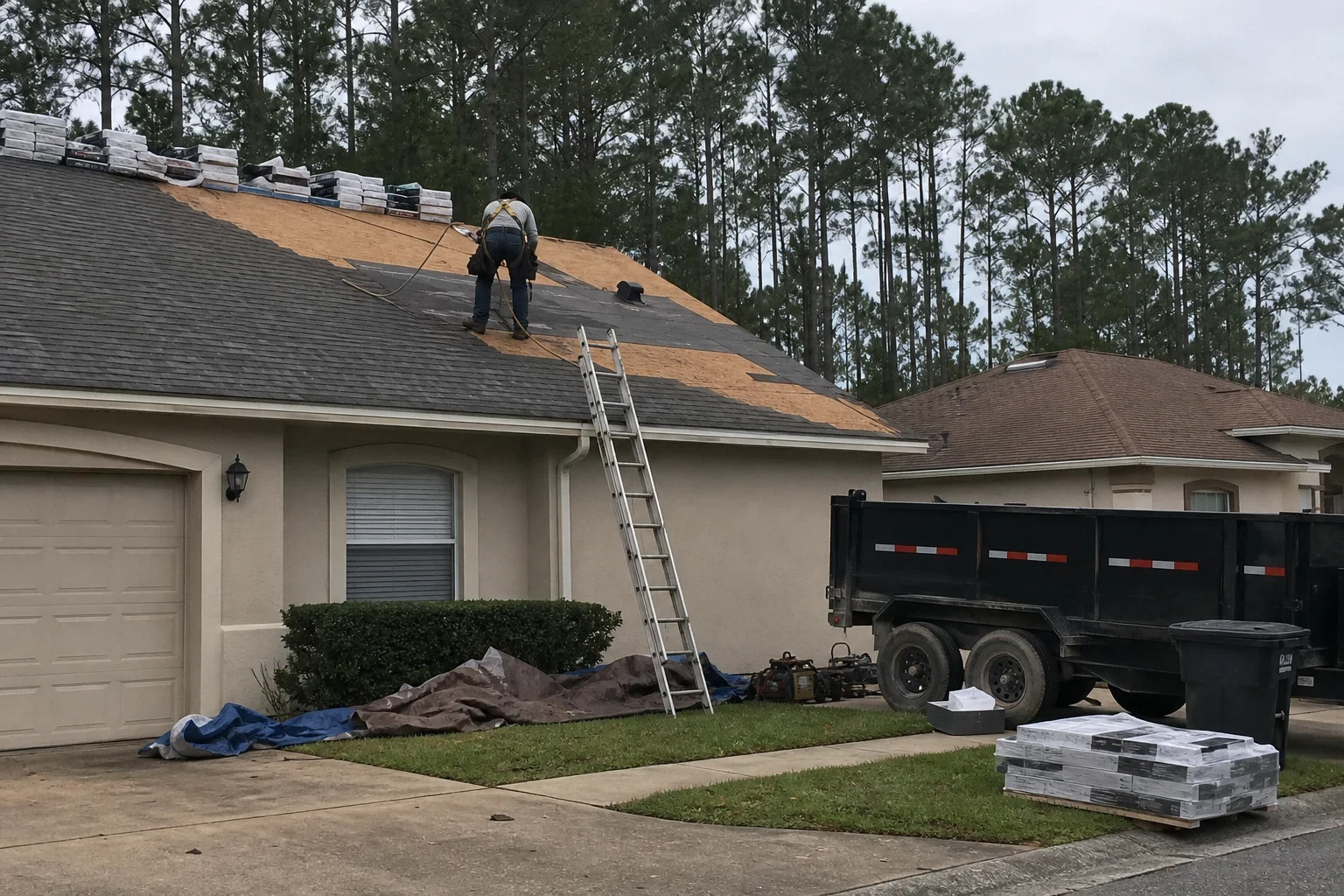
We remove damaged material down to sound decking, replace any soft wood, then install new underlayment, flashing and shingles or panels. We finish by sweeping the yard with a magnet for nails and walking the finished work with you.
Answers on storm repairs and claims
Do I phone my insurer before I phone a roofer?
You can do it in whichever order suits you. Some homeowners like to have our free post-storm inspection done before filing, so they know whether the damage justifies a claim. We share the photos and leave the decision with you. Read your policy as well, because many put a deadline on reporting storm damage.
How involved are you with my insurance adjuster?
Quite involved. Our crew works directly with your insurance adjuster on storm damage claims, passing along our photos and written scope and joining them on the roof when that helps. We explain the findings in everyday language. Coverage and any negotiation remain between you and your insurer.
My roof isn't leaking. Can it still be damaged?
Yes. Hail bruises and creased shingles often hold water out for months before they crack, and lifted tabs can reseal loosely without truly bonding. An inspection catches this while it is still a repair rather than a wet ceiling.
Can you match my existing shingles?
Usually we can come close, and we bring samples so you can see them against your roof. When a color has been discontinued, we talk through options such as redoing a full slope so the finish looks intentional rather than patched.
Does a storm repair really affect my energy bills?
It can. Damaged vents trap hot air in the attic, and wet insulation loses much of its ability to slow heat moving into the rooms below. Restoring both helps the house hold its temperature the way it did before the storm.
Find out what the last storm really did
Our technician will check the roof surface and the attic, record the damage in photos and give you a straight account of the repairs needed. We serve Macclenny and nearby towns including Starke and Middleburg.